Fusion data science and modeling at infusion
The research unit Nuclear Fusion at Ghent University is at the forefront of advancing fusion as a clean, safe, and virtually limitless energy source. Our work focuses on developing cutting-edge numerical methods to analyze and model the complex physics and technology underlying fusion devices.
In the rapidly evolving field of fusion data science, we leverage modern approaches such as Bayesian inference and machine learning. These techniques enable advanced pattern recognition, improved modeling of plasma fluctuations and the creation of digital twins for fusion systems.
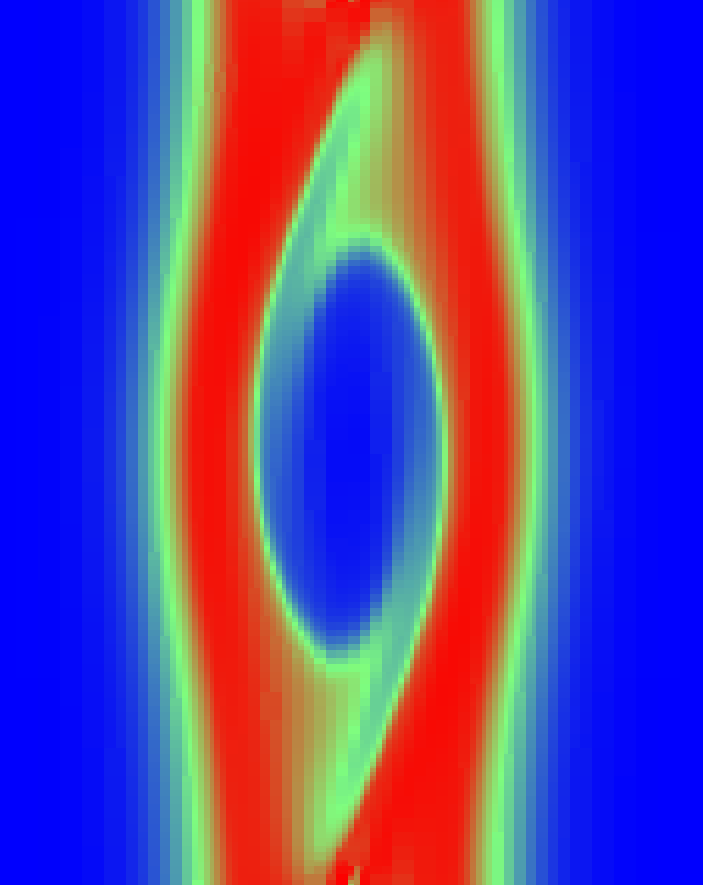
Our expertise in physics modeling spans both magnetohydrodynamics and kinetic theory. A key strength of the group is the development of an in-house Vlasov–Maxwell code, supporting high-fidelity simulations of plasma behavior.


Research topics of the group infusion
Our research activities are situated in the field of fusion data science. Below is a selection of our current research topics.